
The book online · Pierre Verley
Reading the Sky: Mountain Weather for Paragliding, Hang Gliding and Hiking
Read the sky, understand the air, decide. The complete book, with its colour figures and animated illustrations: turn the breeze clock, warm the valley and watch the ceiling rise, launch an air bubble or a cold front.
OpeningBefore going up into the air
Part IUnderstanding the air
The thermodynamic engine: why air rises, and when it stops.
 Chapter 1Physics of the atmosphereThe whole chapter fits into a single question: is a bubble of air that you lift warmer or colder than the air around it? The answer decides everything — the strength of the thermals, the height of the cloudbase, the ceiling, rain and thunderstorms.
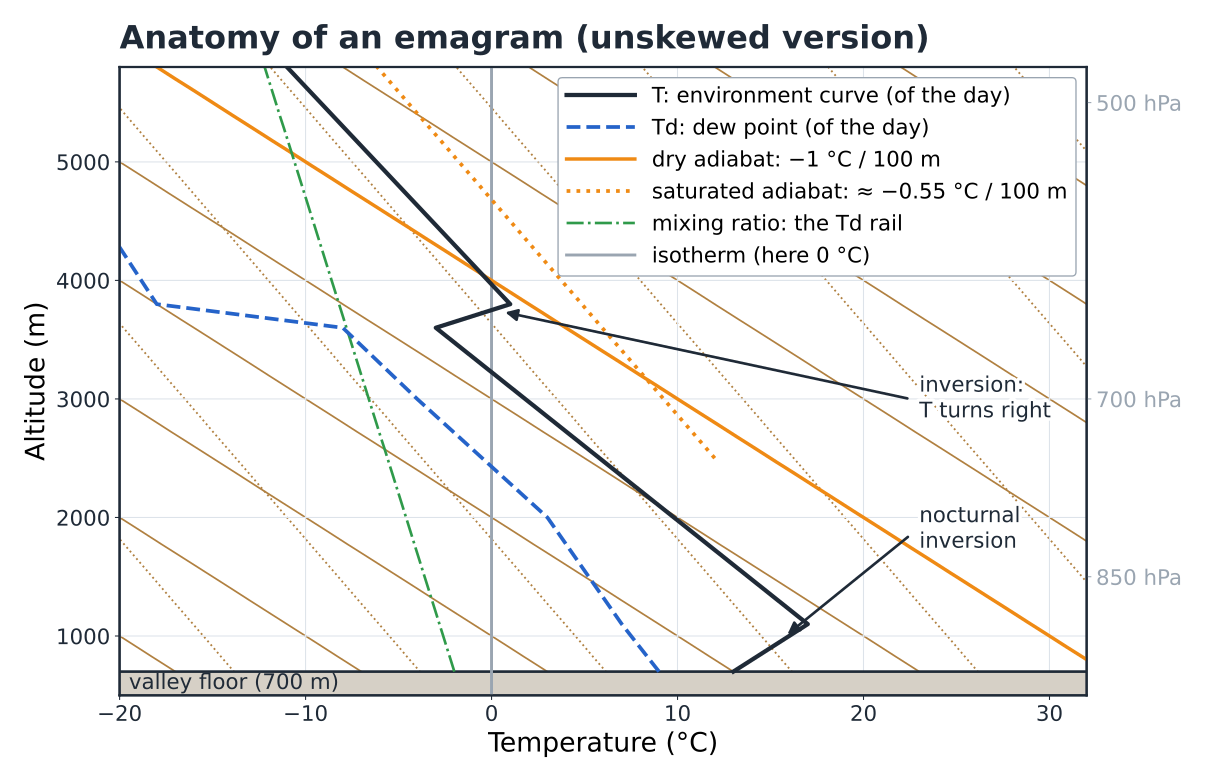 Chapter 2Reading the emagram yourselfIn chapter 1, you understood the mechanics of the rising bubble. Here, you learn the steps: take a sounding and, on your own, in five minutes, draw from it how the day will unfold — the time of the first thermals, the cumulus base, the ceiling, the strength, and what could go wrong.
Part IIThe large scale
Lows, fronts and charts: the weather on its way.
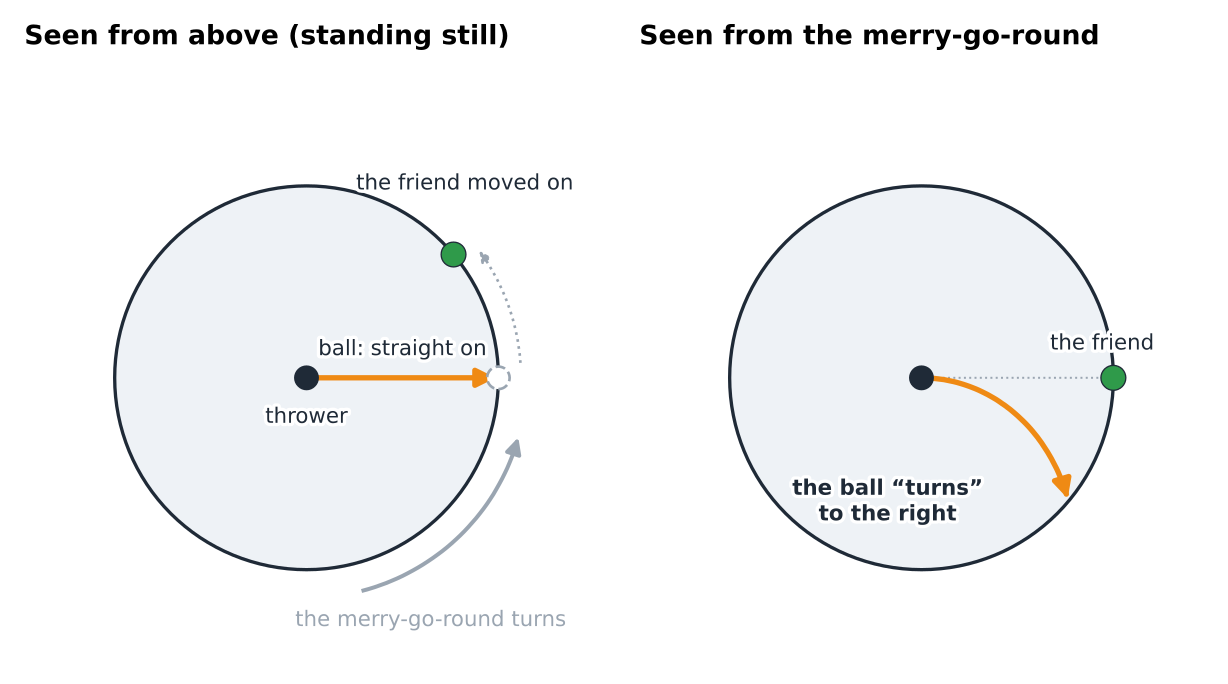 Chapter 3General circulation: why the air goes roundWhy do lows turn anticlockwise, and anticyclones the other way? Why does a low make cloud, and an anticyclone the lid that caps your ceiling? The answer is built from three bricks — pressure, the Earth’s rotation and friction — and everything else follows from them.
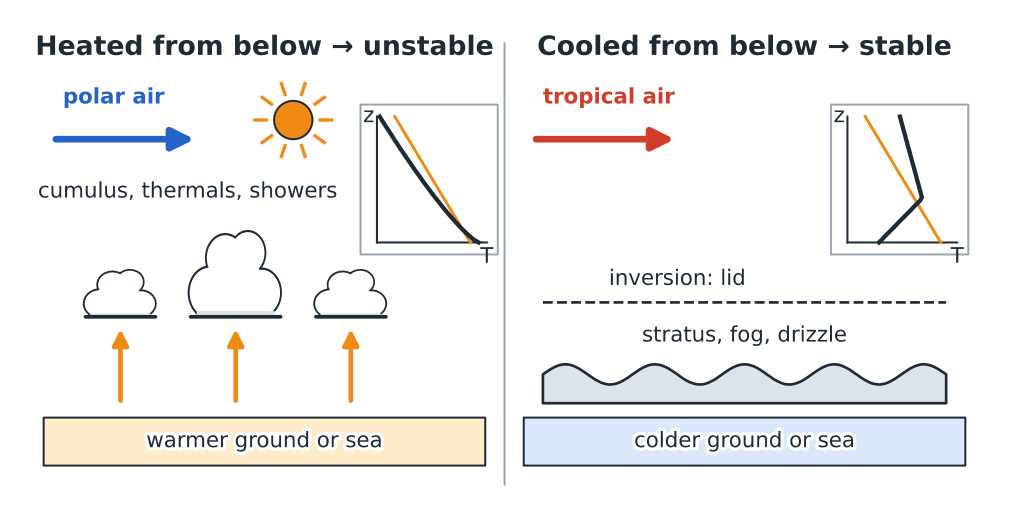 Chapter 4Air masses and frontsChapter 3 showed the machine that stirs the air of the mid-latitudes. This one introduces the fighters — the air masses — and the line where they clash — the front. By the end, you will be able to read in the sky when the rain will arrive, tell rain that lasts from a shower that passes, and recognise the flying day that follows the bad weather.
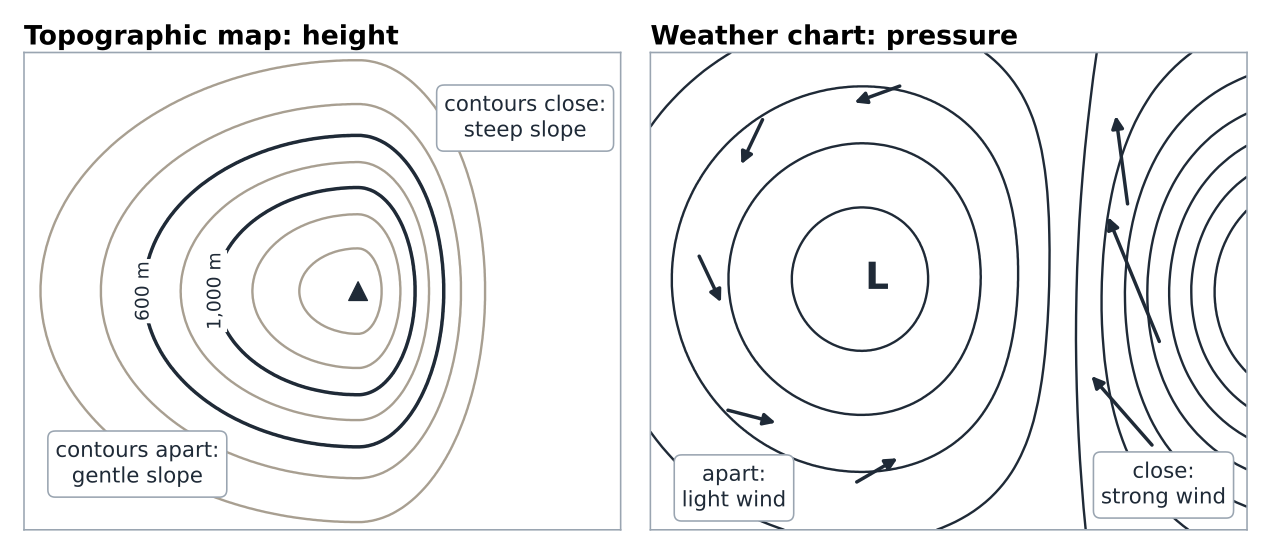 Chapter 5Reading weather chartsYou know what a low is, how it turns and what its fronts will put you through. This chapter teaches you to see all of that at a glance on two documents: the surface chart, which shows the actors, and the upper-air chart at 500 hPa, which directs them. It ends with a method in five steps and with the four typical situations that make the weather in the Alps.
Part IIIThe mountains
Terrain, breezes and thermals: the scale of the pilot and the hiker.
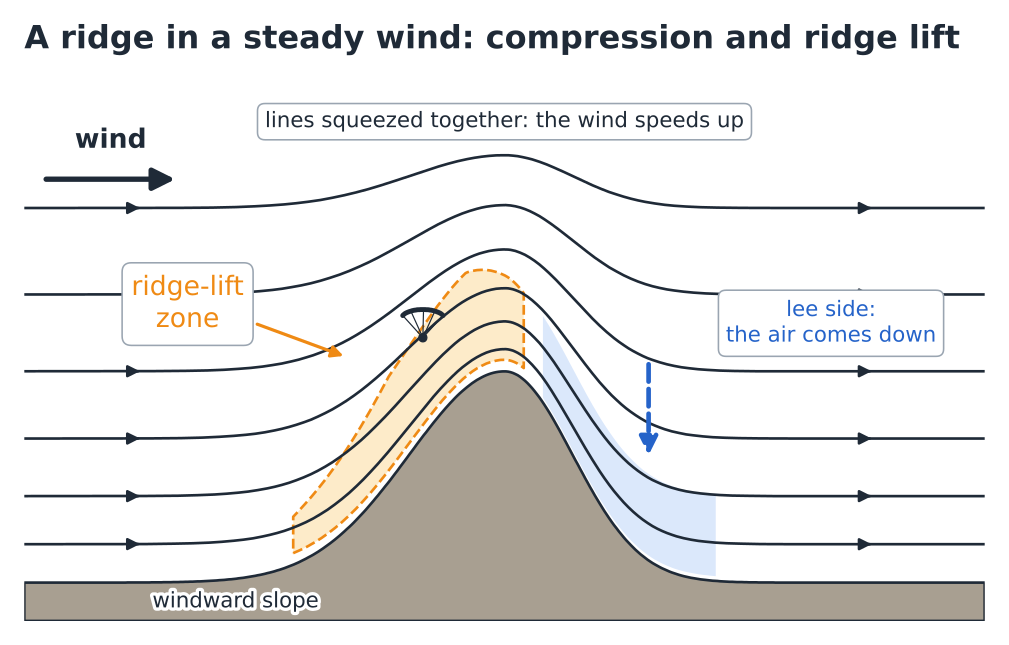 Chapter 6Wind and terrainThe wind on the charts is a broad, steady river. The mountains turn it into a torrent: it speeds up over the ridges, squeezes through the passes, plunges behind the summits and swirls where you least expect it. Learning to read this torrent means choosing the right launch, and knowing on which ridge you’ll be cold.
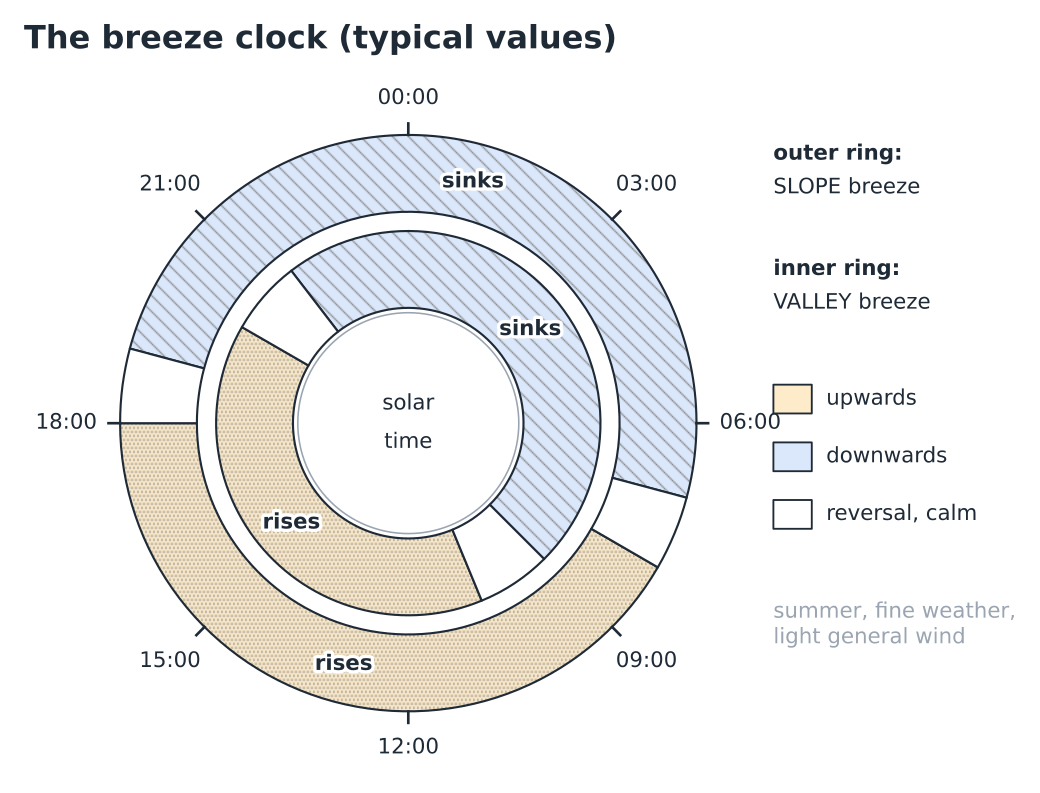 Chapter 7Breezes: how the valleys breatheWhen the general wind falls silent, the mountain makes its own wind. It breathes in by day and out by night, always in the same order and at almost the same time. Knowing this rhythm means knowing when to launch, which way to land, and why the wind picks up on the trail around midday.
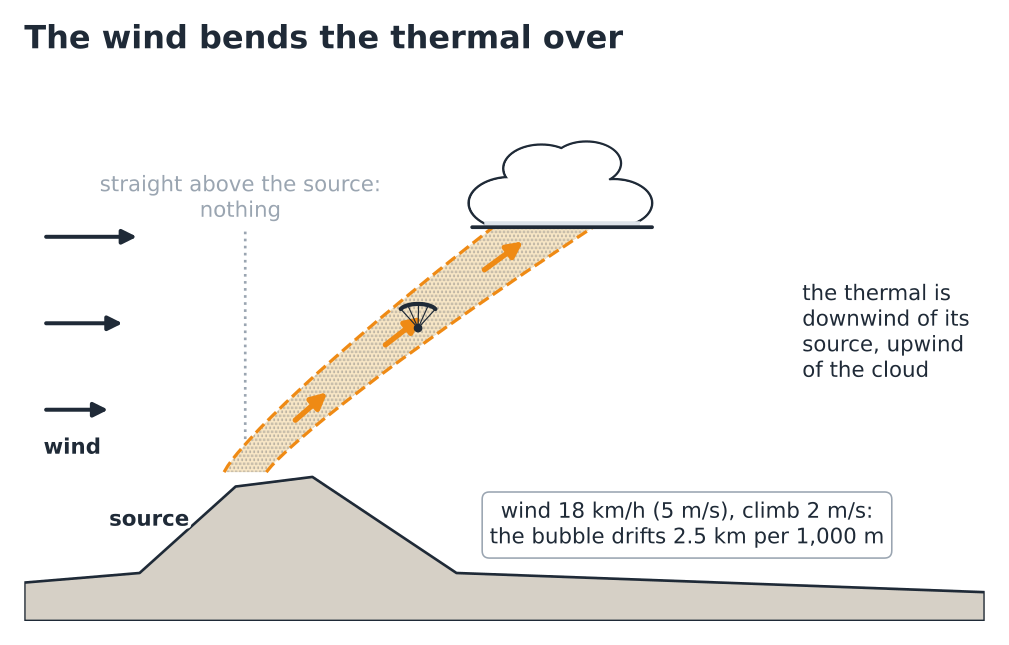 Chapter 8ThermalsA thermal is a bubble of air heated by the ground that breaks away and rises. The pilot’s whole day consists of guessing where it is born, where the wind carries it and when it dies out — and the hiker’s whole afternoon depends on what these same bubbles produce when they turn into clouds.
Part IVDeciding
The hazards to recognise, the forecast to build, and twelve days to practise on.
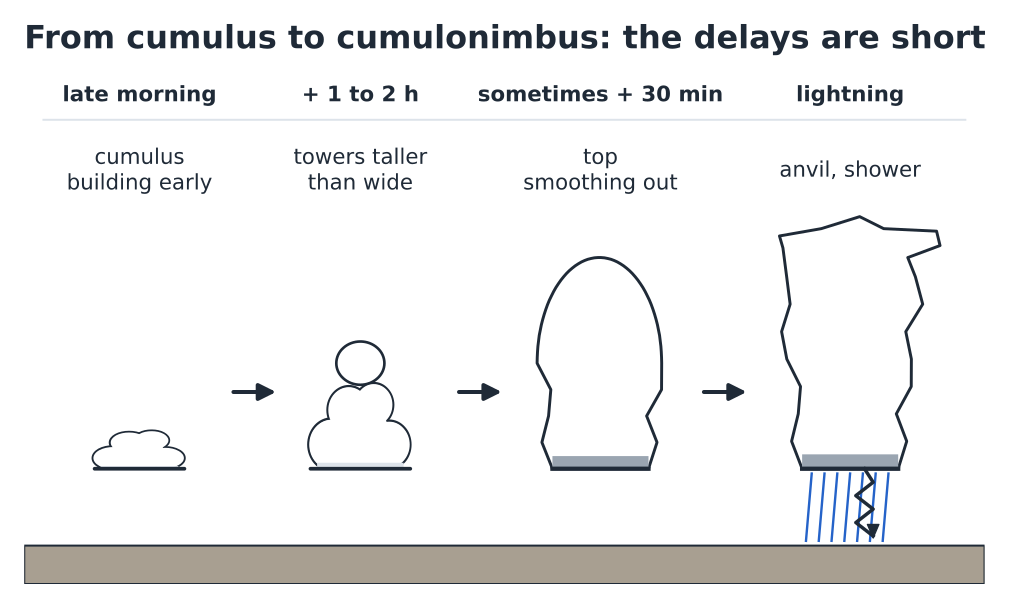 Chapter 9Mountain weather hazardsIn the mountains, the weather does not cause accidents by surprise: it almost always gives warning. The danger lies in the gap between the moment the signs appear and the moment you react. This chapter teaches you to see the signs, to know the timescales — and to decide before you need to.
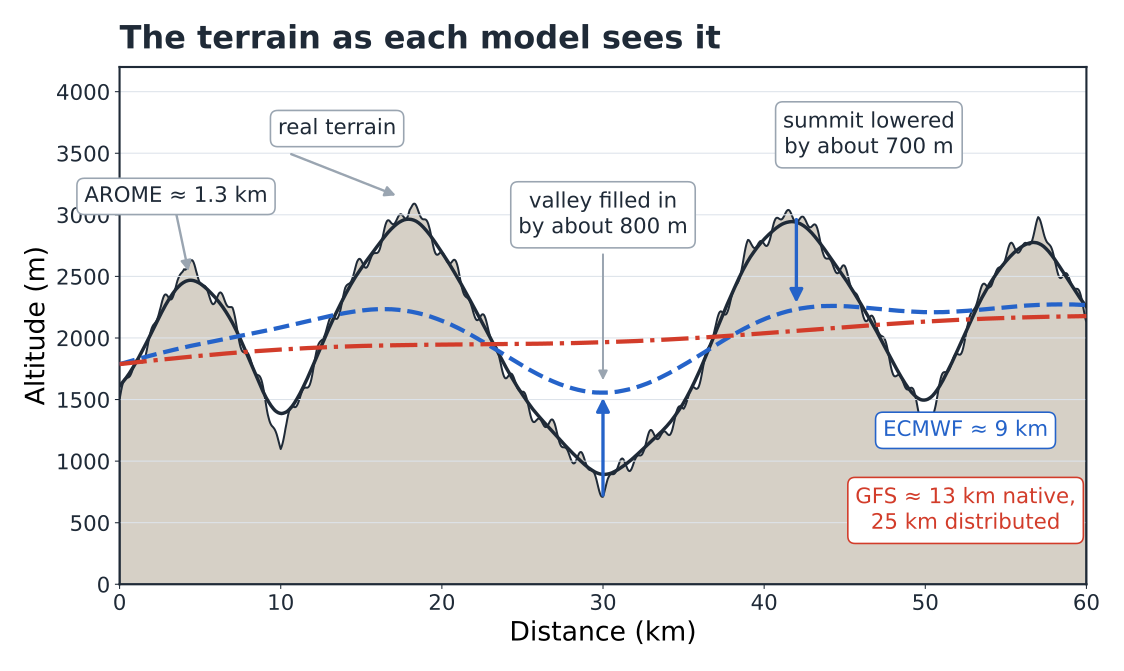 Chapter 10Forecasting in practiceYou know how to read the sky, an emagram, a chart. What remains is the everyday routine: opening three websites the evening before and two wind stations in the morning, looking at the sky at launch or at the trailhead — and drawing a decision from it all. This chapter is about method: which tools, in what order, with how much confidence.
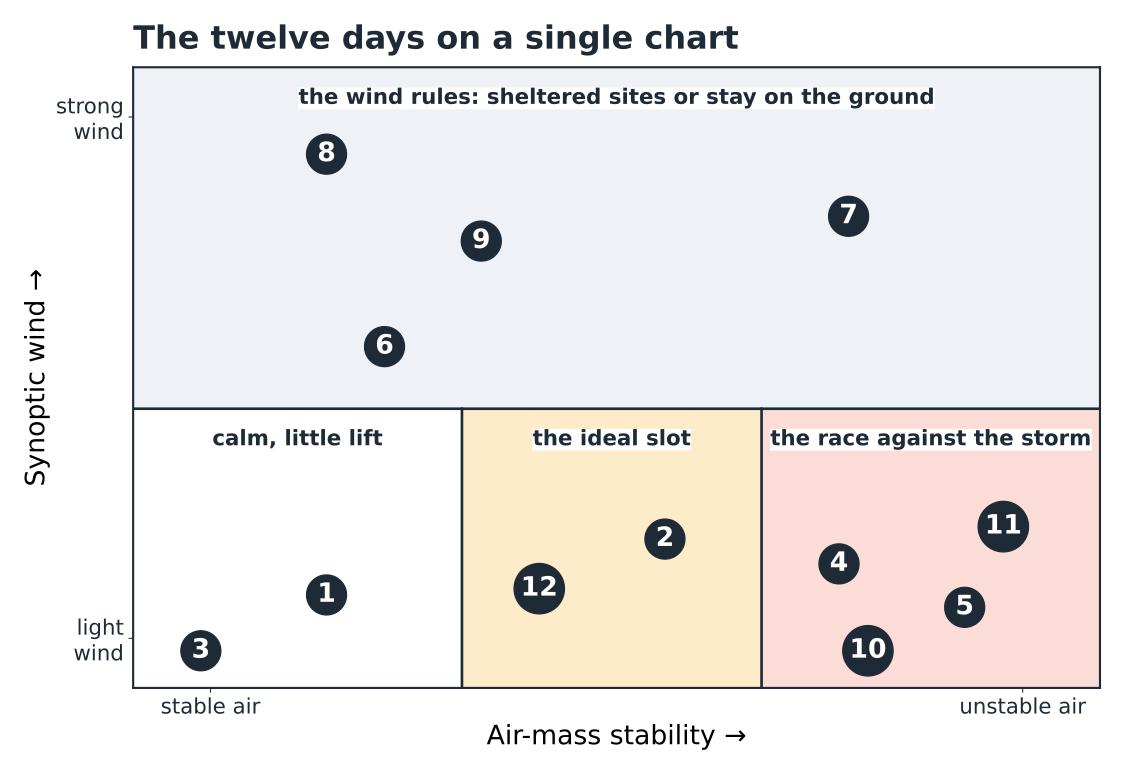 Chapter 11Workshop: twelve typical daysTwelve days, twelve skies. For each one, a plate: the chart, the morning sounding, and the day as it unfolds, hour by hour. Then two verdicts — the pilot’s and the hiker’s — and the pitfall waiting for anyone who looked too quickly.